Sunday, October 7, 2012

The Black Hills, South Dakota and Homeward Bound

 
Did I mention it was dry and dusty out here.........

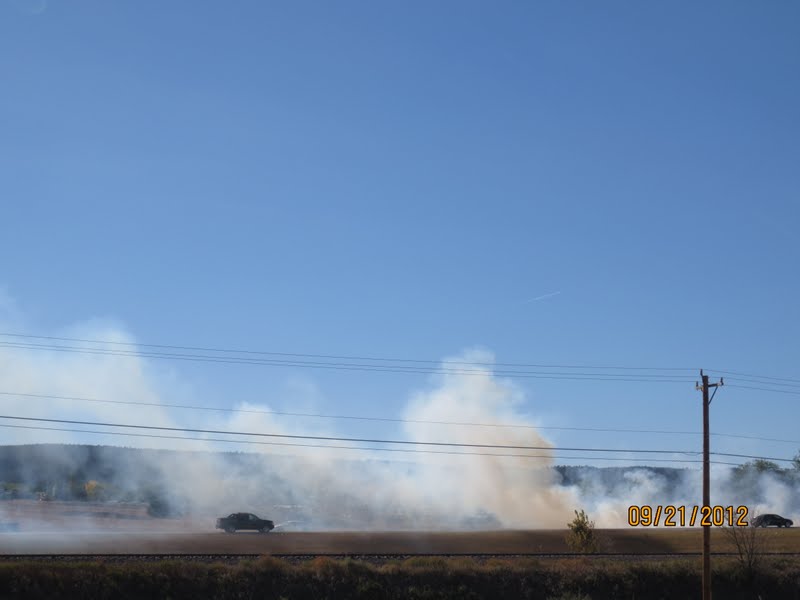
A grass fire on the interstate across from our RV park really slowed down the traffic.


We visited Mt Rushmore National Monument in the Black Hills, South Dakota.  What an inspiring sight.
The sculpture was created by Gutzon Borglum aided by 400 workers.  It cost $989,992 to make and took 14 years from 1927 to 1941.   Scientists say the rock erodes at a rate of about 1 inch per 10,000 years.  No erosion has been detected since 1941. 


The entryway with the state flag for each state represented.
A back view of the main entrance showing an amphitheatre.


Gutzon Borglum was an established sculpture long before he began Mount Rushmore.  He studied in Paris and lived and worked in London and New York.  He completed more than 30 public commissions worldwide during his lifetime. 

The last model made by the sculptor in 1936 midway during the construction process.  Because of a variation in the rock formation, plans did not include the lower portion of the model.


Over 450,000 tons of rock were removed from Mount Rushmore to bring out the four presidential faces.  About 90% of the rock was removed with dynamite and the remaining rock was removed by drilling with jackhammers and wedging the rock off the mountain.   A cable tram attached to the top of the Roosevelt sculpture was originally used to carry tools and supplies.  In 1936, it was enlarged to allow humans to ride in it.  Most of the workers still preferred to hike the more than 700 stairs to the top of the mountain each day.
Borglum modeled his Washington figure after the life mask created by French artist Antoine Houdon during a visit to Mount Vernon in 1785.  Borglum carved the head in an upright position without the slightest tilting forward or backward to fix upon the mind of the observer the upright character of the figure.  When he found the figure too still, he 'pivoted' the body by cutting the left shoulder farther back into the mountain which had the same effect as if the head had been turned.

Jefferson was to be the first figure on the left as you face the memorial.  As the initial carving proceeded it was discovered that there was insufficient rock for the figure to be completed in that location.  The unfinished face was blasted away in 1934 and a new start made to the right of Washington.  Partway through the carving of Jefferson a major crack was revealed running through the nose at the right-hand nostril.  Borglum reset the head five degrees to the north, set it back four feet, and tilted the head about eighteen inches.  Finally the crack just escaped the nostril.  It still can be seen cutting down across the right eye, past  the nose and upper lip, and through the middle of the chin.


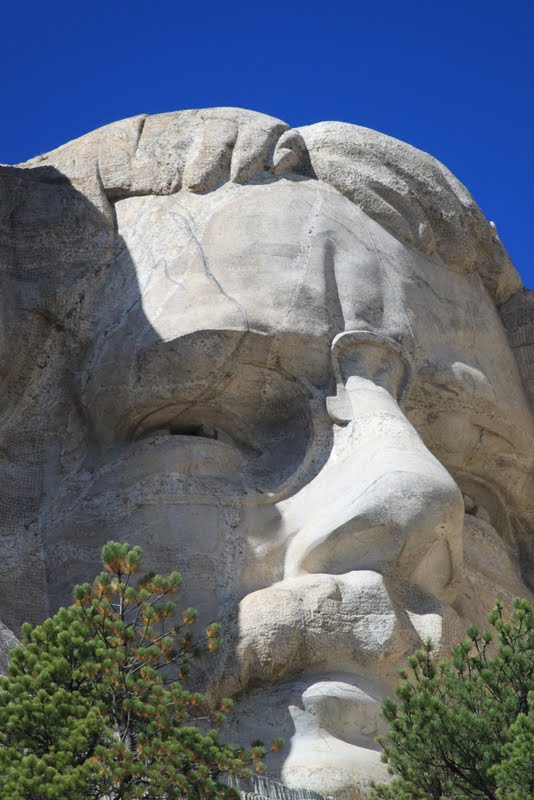
The carving of Roosevelt proved to be the most difficult of the four presidents.  Seventy-five feet of overlaying rock was drilled and blasted away before suitable granite for carving was found.  Theodore Roosevelt's famous pince-nez offered a chance for ingenuity.  The artist managed to suggest the eyeglasses by merely carving a curved ridge under a part of the eye.

A major question confronting Borglum was whether to carve Lincoln with or without a beard.  There was a beardless head of Lincoln in the Capitol Rotunda in Washington, D.C., and the sculptor had been urged to carve him with a clean shaven face.  After studying many photographs, he elected to portray Lincoln with the beard he wore during his presidency. 

One of Borglum's most notable refinements in the carvings was his treatment of the eyes.  Concave depressions were carved so that the dark shadow gave the impression of depth.  The pupils were represented by a graft of granite about 20 inches long projecting from the socket with its front surface ground smooth to reflect the light.  As each figure was completed, the sculptor worked with this technique to achieve the life-like expression that can be seen today.
 

While the granite is extremely resistant to weathering, the sculptor realized that water accumulating in the many cracks would expand with freezing and eventually damage the carving. In 1990, a study by the National Park Service determined that Borglum's old 'recipe' of linseed oil, white lead, and granite dust should be replaced by a silicone sealant that is more effective. Each year maintenance crews conduct a routine inspection of the monument and patch cracks wherever necessary.

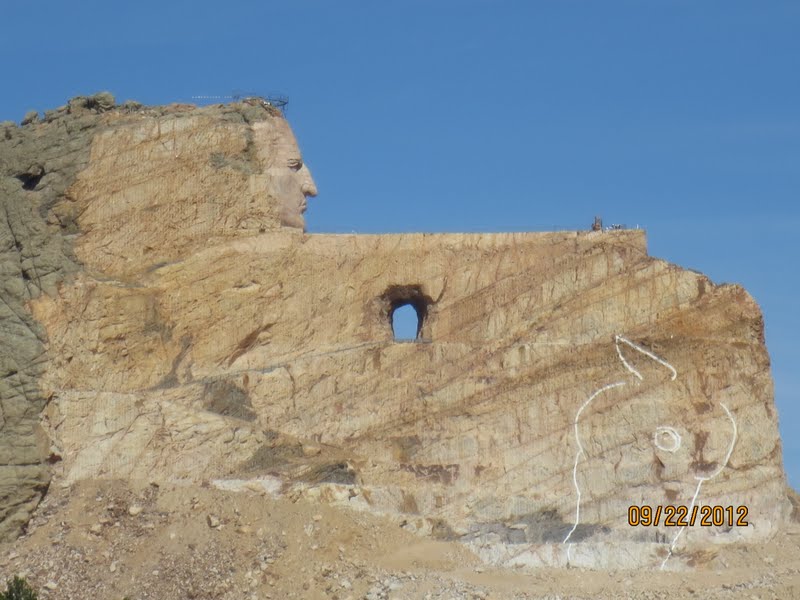
After the inspiration of Mt Rushmore we decided to drive to the monument to Chief Crazy Horse that has been in the works since 1948.  Not exactly what we expected.

There are only a few men working on this monument so it is a very slow process.  The white figure represents what the horses head will look like.


This is what the completed sculptor will look like when finished..

 
A charge of $10 per person allowed you on to the grounds and another $4 per person enabled you to take a bus trip closer to the monument.  The grounds has a visitors center and they are also building a museum.  Eventually they will build a hospital and a college.  There were a lot of tourists at the site so they should be making pretty good money.  We got the feeling they were putting most of it into the grounds rather than the sculpture.


After the tour of the Crazy Horse monument we decided we needed some refreshments and drove to a nearby town with a winery. 


On the way we saw this warning sign along the road. 

They weren't kidding.  A whole bunch of them raced across the road just outside of town.

They were very frisky, kicking up their heels and racing onto people's yards.


We arrived at the winery which specialized in Kick-Ass Rhubarb wine.  Hey, that is what they called it. 

There were some nice sitting areas outside.........

and some of the visitors were really getting into it.


We drove through the old western town of Deadwood, South Dakota, which is now mainly a tourist attraction with restaurants and casinos.


The Badlands National Park consists of 244,000 acres of amazing terrain.  The French trappers called them les mauvaises terres 'a traverser - bad lands to travel across. 


Strange terrain that almost makes you feel as though you are on the moon.
Many years ago the rock layer you see was not rock but the muddy bottom of a stream bed.  Over time, the sediment hardened into thick horizontal bands of grayish red stone.


Several areas we were allowed to hike through and it was amazing how strange the sediment was. 

There aren't a great deal of critters that live around here although there were several signs we noticed along the trails.

You were careful to walk very carefully.  Did I say careful?

Over time water has sliced through the earth  exposing  sedimentary rock layers.  These layers continue to erode today into dramatic canyons and spires.  Look closely on the upper right of this photo and you can see the park road.

This is the road in the previous picture.  The opposite side of the road is still prairie land.  In time the road will be destroyed by the advancing erosion. 

Some big-horned sheep grazing on the prairie.

The rock formations had many different hues.

This is one of my favorites.

A very unique place.
This is a much advertised, well-established store that has become a tourist stop for many visiting South Dakota.  We drove past but there were so many tourists and buses we chose not to stop.

And finally the long drive home............

Driving through eastern South Dakota. 

Nebraska was a beautiful state......I was thinking of you Karen R. as we drove through.

The Missouri River.

One blade of a windmill we saw driving down the interstate.  They are huge.
Passing through Iowa we saw an exit for West Des Moines which reminded me of Iowa Farm Bureau, the last account I worked on before retirement.

It was great to see grass and trees again and fall was coming to the Midwest.

The Mississippi River.

Fall colors where we stayed in Elgin, Illinois, while we visited with Brett's friend Randy and his family.

We had to stop in Algonquin and enjoy a real Chicago pizza. 

The Captain starting to enjoy the meal and some good brew. 

Wow!  Was that ever good!!!!

 
Randy and Valerie Arndorfer, the friends we stopped to visit with in Illinois.  We had a great time and Brett and Randy waxed philosophical over their days in the Air Force.  Ah, sweet memories.....

 
Coming into Tennessee we ran into rain, something we hadn't seen since we were on the Pacific coast.
And more rain as we entered the mountains.

The sky and mountains painted a beautiful picture.

Woohoo.........we made it!

Home, sweet home.

And that is all for this trip, folks.  We had a great time for four months but now it is good to be home.  Hope all of you are having a wonderful fall and we wish you the best  throughout the holidays.  We will begin again in January........next stop southern Texas. 

Sunday, September 23, 2012

Medora, North Dakota

Theodore Roosevelt National Park, southern entrance, in Medora, ND.
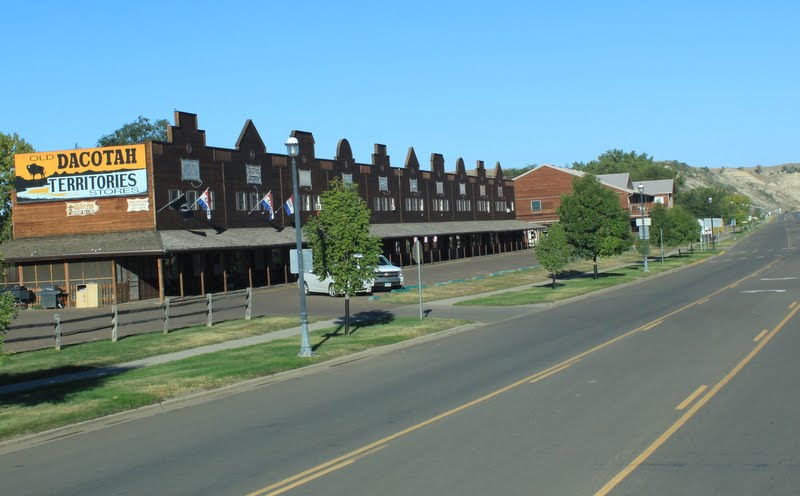
We arrived in the booming town of Medora, ND, population 100, which has the entrance to the south unit of  Theodore Roosevelt National Park.   Medora is a western town that does a great business in the summer time (the biggest attraction in the state of North Dakota) and while we were there they also had the  ND Petroleum Conference going on so things were popping in the small town.

Medora was named for the wife of the Marquis de Mores, who was an aristocrat from a wealthy French family.  His wife, Medora, was the daughter of a banker in New York who also was raised in wealth.  With backing from his father-in-law he moved to North Dakota and purchased 44,500 acres of land to take up ranching.  He tried to revolutionize the ranching industry by shipping refrigerated meat to Chicago by railroad thus bypassing the Chicago stockyards.  He built a meat-packing plant in the town he founded in 1883 and named for his wife.  He also built a 26-room house for his family in Medora which still stands today and is called the Chateau de Mores.

While the house was considered only a summer home for hunting by the de Mores family, it was quite the place in Medora, North Dakota.

They had many guests from New York who took a four day train ride to reach their home.

Many of the furnishings are original to the house and on display.

The kitchen where the meals were completed.  The de Mores brought their own staff from New York each time they traveled to the west. 


Privacy was a precious commodity in a house with servants so the Marquise ordered multi-colored paper in the pattern above to be applied to the glass on all interior doors.  The product was called, "Eureka Stained Glass, A Perfect Substitute for Stained Glass".  

This was the tub of the Marquis with his toilet to the left.  I still haven't figured out how that tub worked.

The Marquis bedroom.

The Marquise's bedroom was right next door.

Her commode was smaller but more elegant.


This was the main living room for the family and guests. Note the bison hanging from the wall.  Both the Marquis and his wife loved to hunt and she was considered the better shot by the locals.
An original turning book case.  The de Mores were avid readers and Teddy Roosevelt, who lived a few miles away, often  came for dinner and borrowed some of their books.

The smokestack is all that is left in Medora of the packing plant that de Mores built in 1883.

Alas, the Marquis was not the best at business and three years after he built the packing plant it was closed.  During those three years he got into several duels with the locals and eventually killed a man.  He was arrested three times, tried once and acquitted.  He and the family went back to France where he became involved in other political and risky initiatives that eventually led to a trip to Africa where he was murdered by some tribesmen. 


The Teddy Roosevelt National Park has a scenic 60-mile loop drive that we enjoyed.  The Badlands can be a very stark area.


The daytime temperature was nice but the evenings were cool.  The hardwood trees were changing colors which made the overlook of Medora from the park quite beautiful. 

Throughout the park were many 'prairie towns' inhabited by the local prairie dog.

You could see them everywhere in the park, there must have been thousands of them, and they were fat and sassy.


In the distance is the Little Missouri River.  The West has been very dry so the plants and animals are struggling.


The Captain at a Badlands overlook.
 

A beautiful view from near the top.

While in the park we came upon a herd of wild horses.  They were curious about us and stood their ground.

Several of the males got kind of frisky (if you know what I mean) but we deleted those pictures.

This big boy kept walking closer and closer toward us (I think he wanted the hat).  Finally, the Captain beat it to the car safely. 
  
Later we came across some bison.
 
This big boy was watching us.......

while this big boy was enjoying an afternoon snack alongside the road.
Interspersed among the bison were the ever present  prairie dogs who were smart enough to keep out from under their feet.
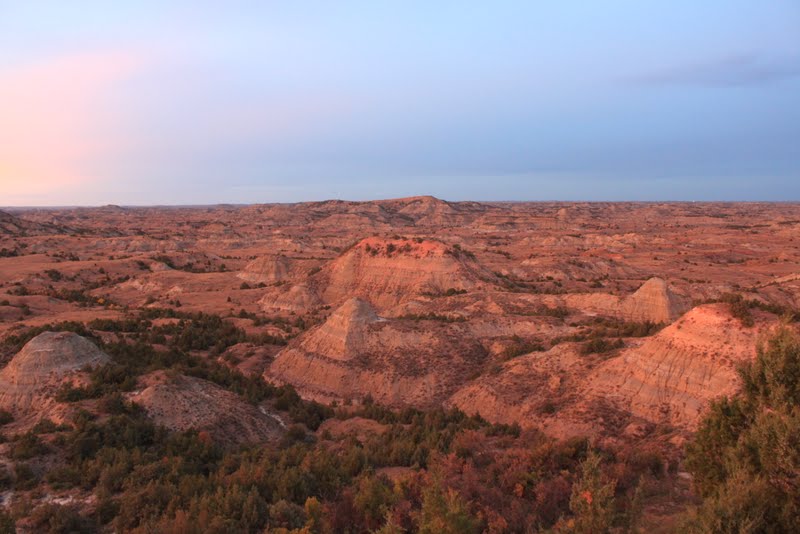
We stopped at the Painted Canyon inside the park to watch the sunset.

Just a few of the pictures we took............


Due to the crowds, we decided to take pictures of Medora on the way out of town.

It was only 9 AM so the streets hadn't been taken over yet.
 
We also left very quietly because the local mortician was up kind of early.  Must have been a bad night........I wonder if there was another duel.

And that's about it for North Dakota.  It was a stretch to keep busy for three days in this area but then, maybe that's just us.  On to South Dakota and Mount Rushmore.  Peace!